Revolutionizing Orthopedic Care: The Future of 3D-Printed Casts
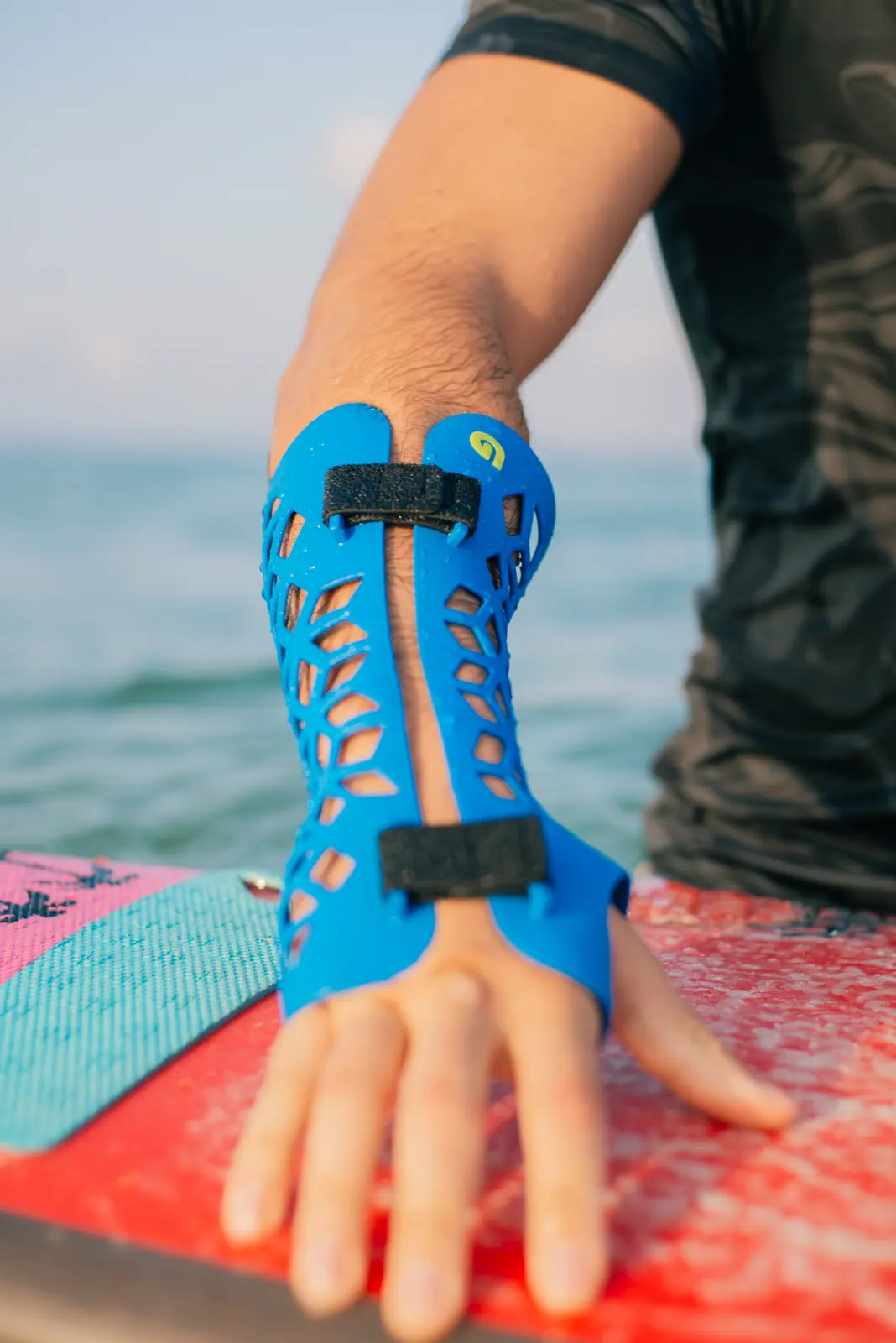
Orthopedic care is changing, and 3D-printed casts are at the front of that change. Plaster casts have been the go-to treatment for fractures for decades, but they bring discomfort, hygiene issues and no room for personalization. Gero3D makes custom 3D-printed casts that are lightweight, comfortable and hygienic.
The problem with traditional casts
Plaster immobilizes bones well, but it is heavy and cumbersome, and its porous surface can irritate the skin. It also offers no personal choice, which makes it harder on patients who want to stay comfortable and feel like themselves while healing.
Why 3D-printed casts are the future
3D-printed casts are light, breathable and customizable. With 3D scanning, each cast is tailored to the patient's anatomy for a precise fit and maximum comfort.
What a Gero3D cast offers
- Lightweight and breathable: no more heavy, itchy casts.
- Custom fit: shaped to the patient's own anatomy.
- Personal design: patients express themselves while healing.
- Hygienic and easy to clean: skin is easier to keep clean and dry.
How a Gero3D cast is made
The process starts with a scan, not a roll of plaster. An iPad app with a structured-light sensor captures the limb in under two minutes, accurate to 1 mm. The software then designs the cast automatically in about 40 seconds, work that takes roughly 45 minutes by hand. Casts are printed, finished and shipped to the clinic within 3 days.
Weight, water and air
A traditional plaster cast weighs about 1.5 to 2 kg. A Gero3D cast weighs about 60 g. Its open lattice lets air reach the skin, and the cast is water resistant, so it is easier to keep clean and dry day to day.
What it means for clinics
For the first days a ONE Splint is applied, and the personalized cast follows once it is ready. The cast is applied in under five minutes and comes off without a cast saw. The Gero platform has been used in more than 500 treatments.
Where this is going
The same scan-to-print workflow can be applied beyond fracture casts. Gero3D is developing orthotic and prosthetic products such as ankle-foot orthoses; read our review of the research on 3D-printed AFOs, or see the FAQ for common questions about Gero casts.
How Gero3D is leading the change
Our process runs from scanning to printing to delivery with no friction for clinics or patients. The future of fracture care is here, and patients no longer have to choose between comfort and style.
Contact us to learn more about our products.