Personalized cast
Short Arm Cast
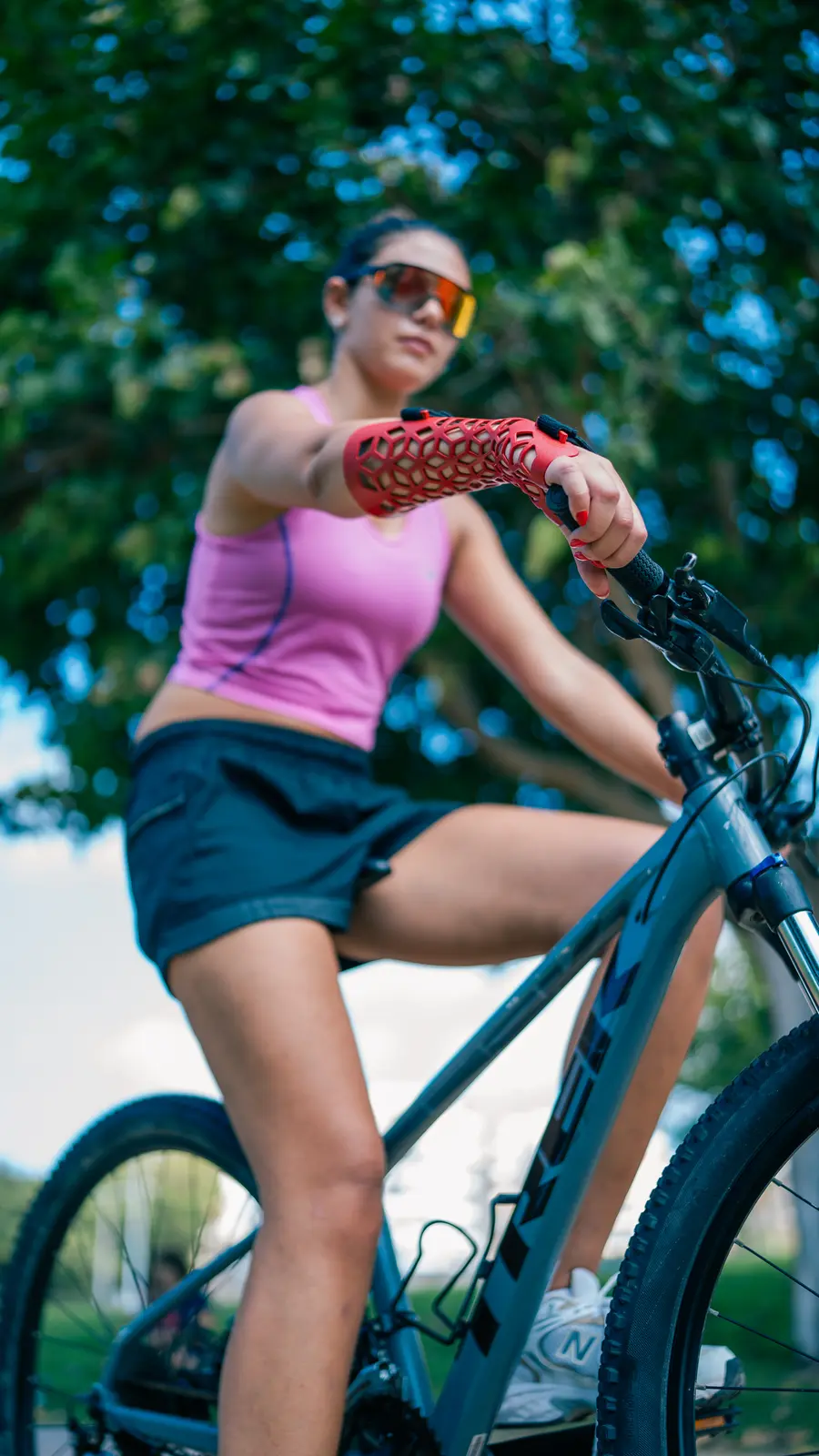
For wrist, forearm and hand fractures. Designed from the patient's scan.
WristForearmHand
3D-printed cast
A Gero cast is designed from a scan of the patient's limb and 3D printed. It's lightweight, water-resistant and ventilated, and it comes off without a saw.
scan · print · heal
Scan of the limb on an iPad, accurate to the millimeter
Automatic cast design, instead of about 45 minutes of manual work
From order to the cast arriving at the clinic
Treatments on the Gero platform
In 3D
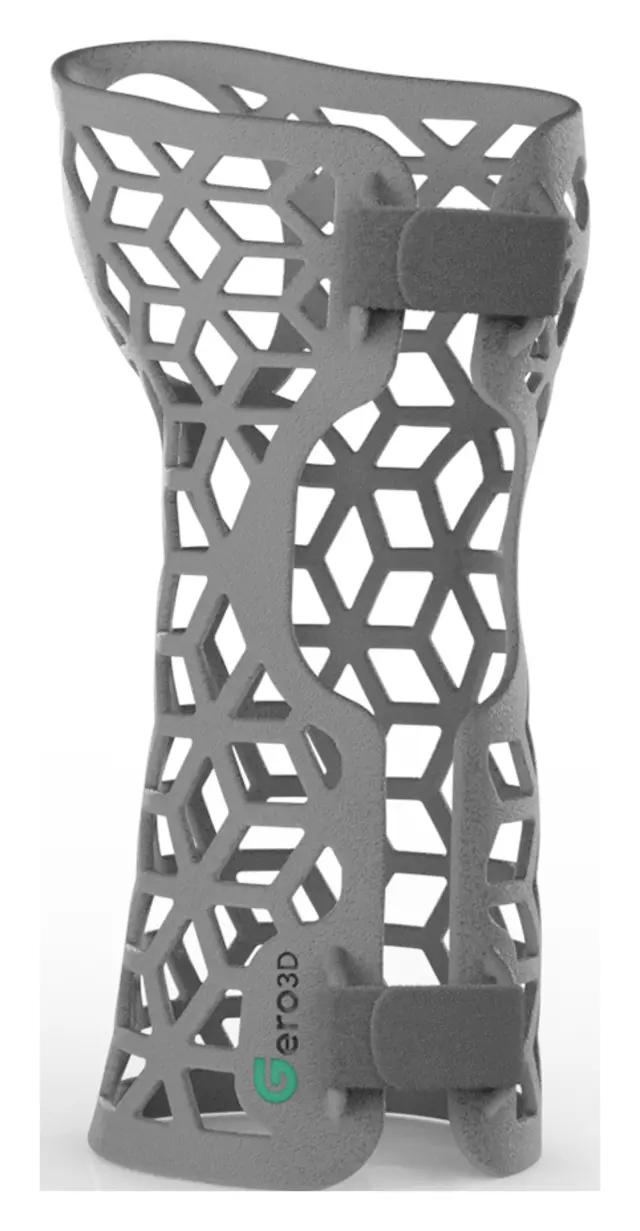
Rotate the cast and pick a color. The open lattice structure gives support while leaving the skin exposed to air and water.
This is an illustrative model. Every real cast is designed from the patient's own scan.
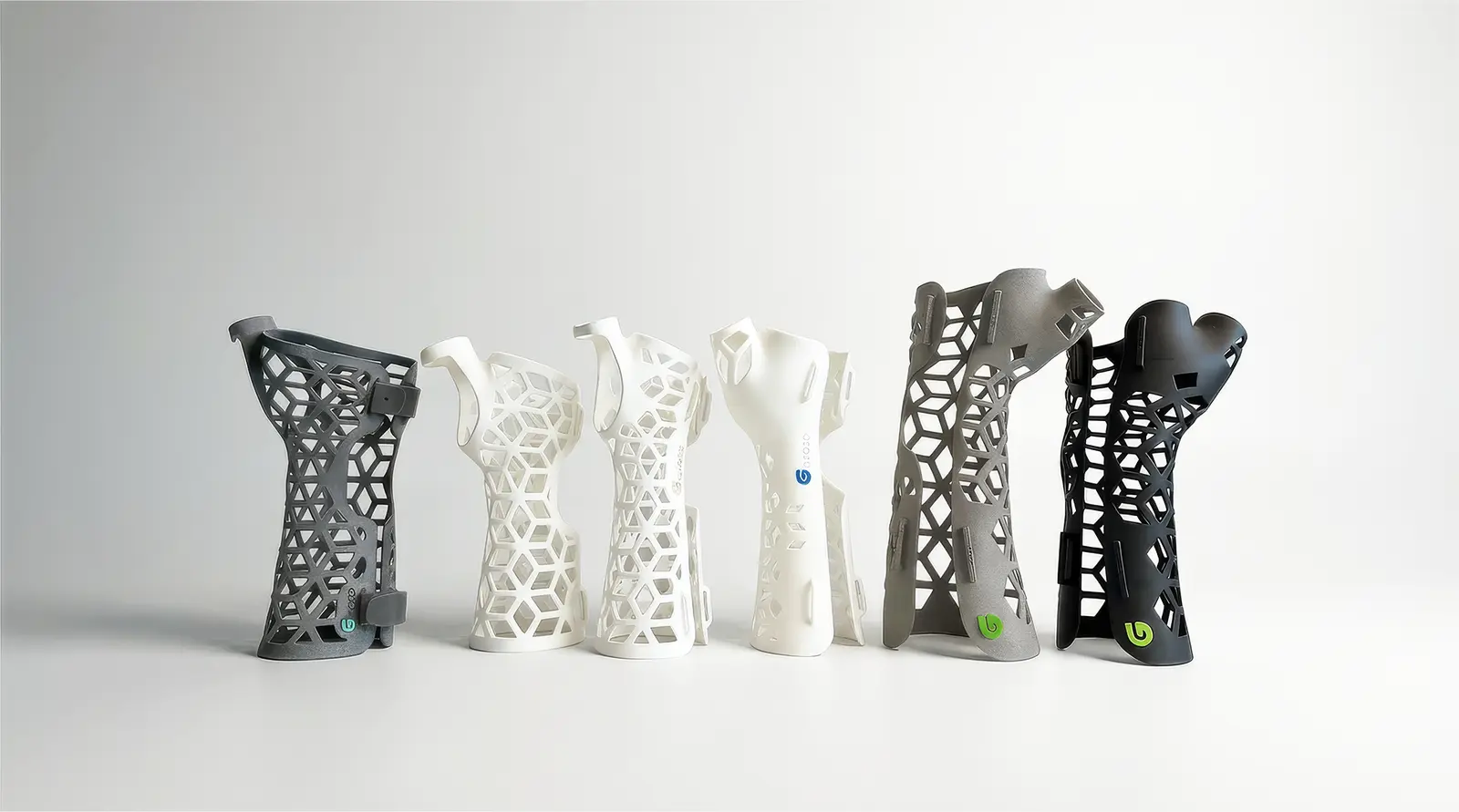 Drag to rotate
What it is
A 3D-printed cast is an alternative to a traditional cast, made to the exact shape of the patient's limb. Instead of wrapping plaster or fiberglass around the arm, the clinic team scans the limb with an iPad, software designs a cast that fits the scan, and the cast is printed on an industrial printer.
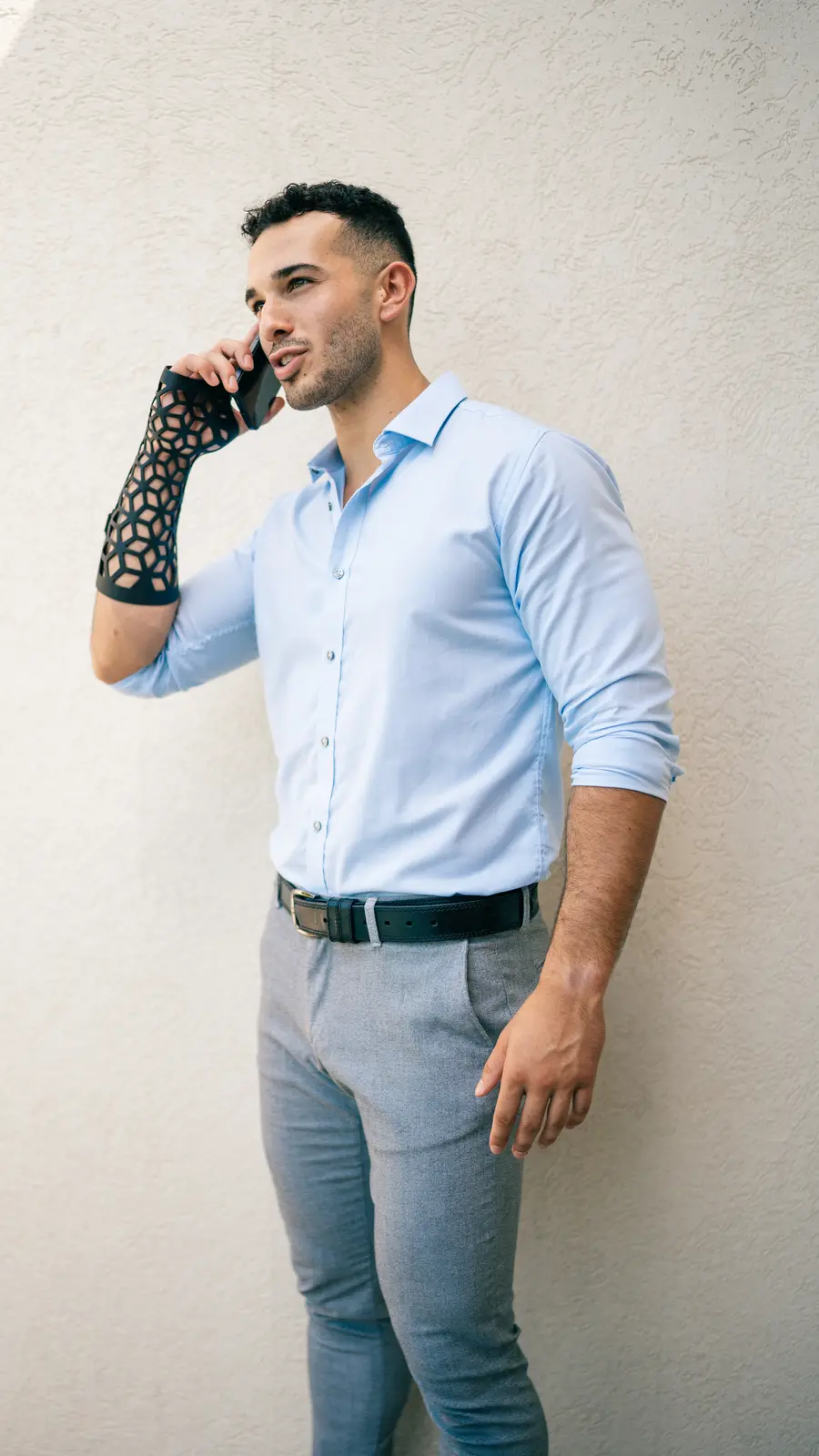
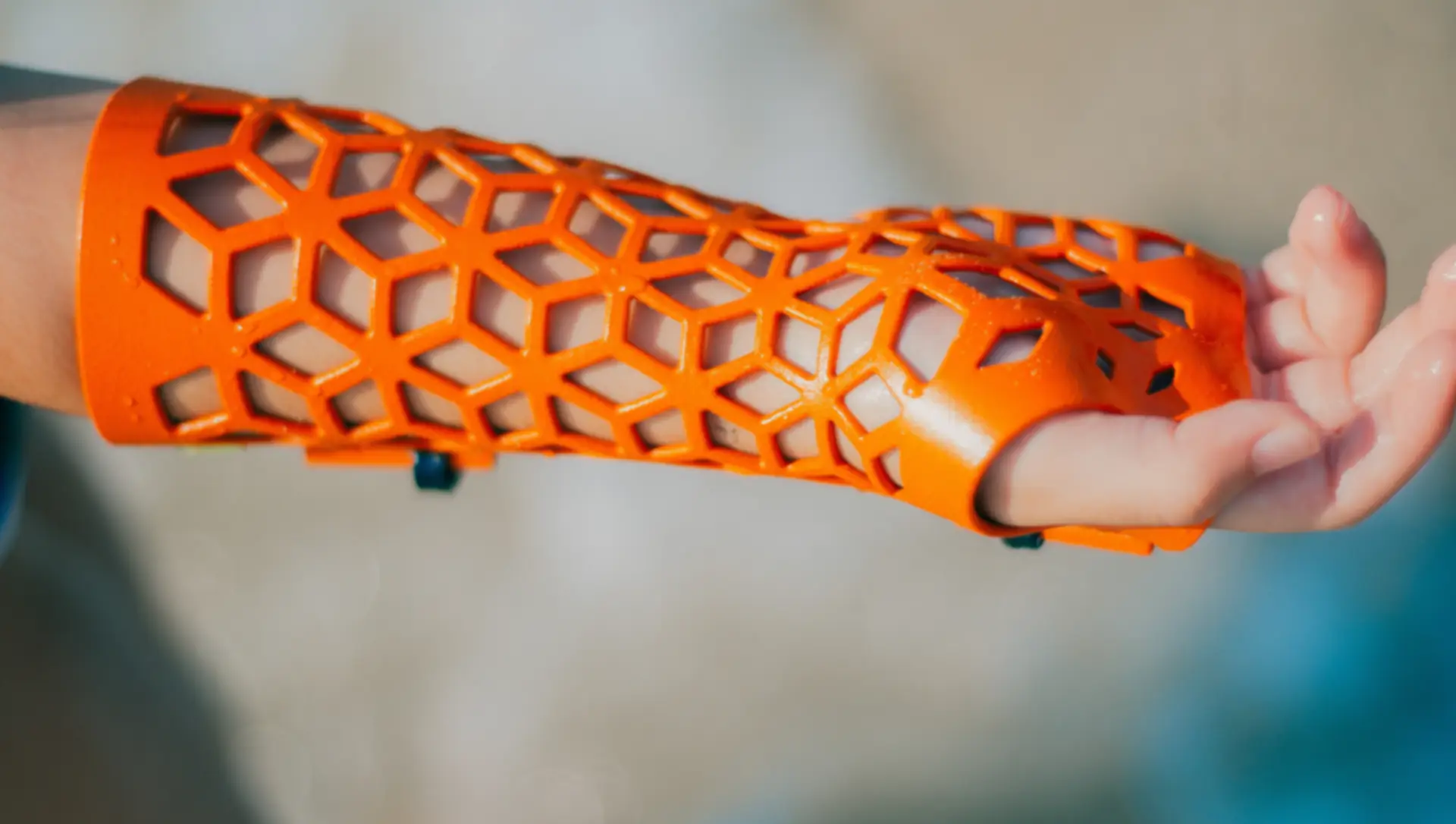
The cast is printed as an open lattice: it gives support where it's needed and leaves the rest of the skin exposed to air and water. That makes it lightweight, ventilated and easy to clean. Every patient picks the color and pattern.
The process
The limb is scanned with the Gero app on an iPad in under two minutes. At the first visit, the patient gets a temporary splint (ONE Splint).
The doctor chooses the cast type, and the patient picks a color and pattern. The app shows a preview.
The software designs the cast automatically, and it's printed by certified manufacturing partners.
The cast arrives at the clinic within 3 days and replaces the temporary splint.
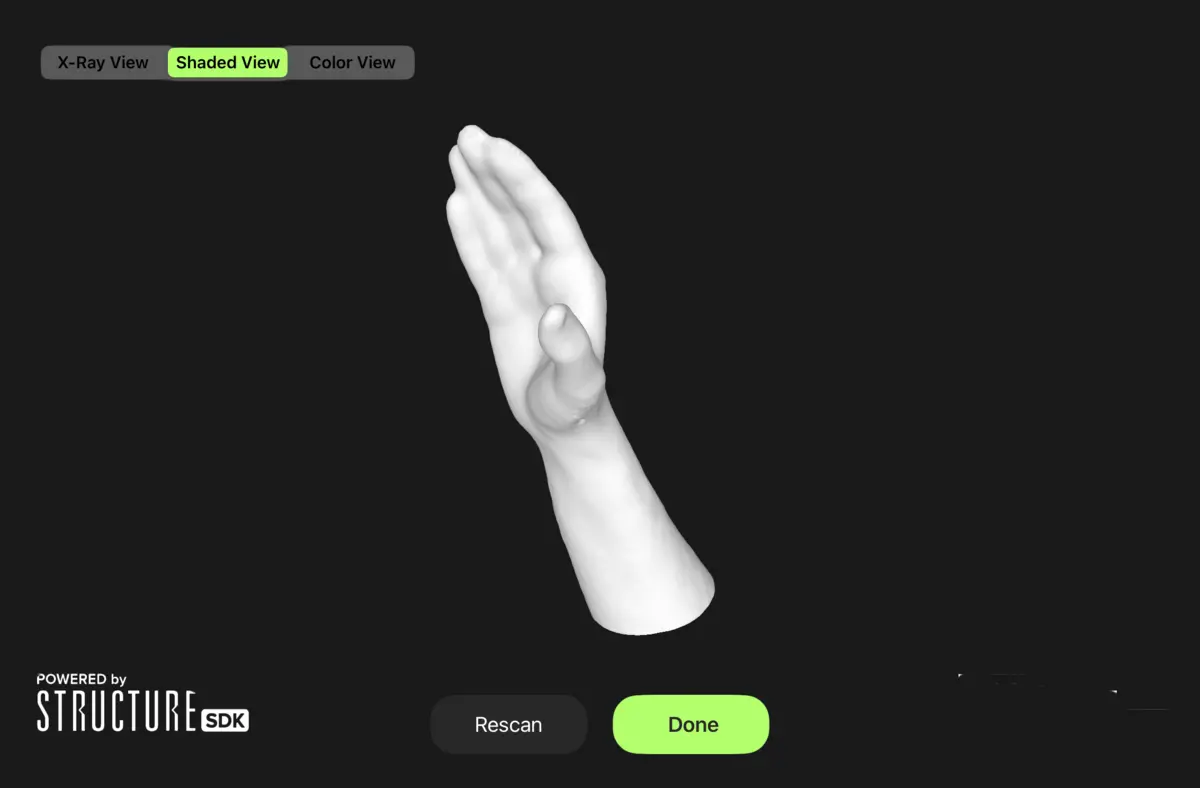
From scan to model
The team scans, checks the 3D model on screen and taps "Done." From there the software takes over: the cast is designed, checked and sent to print.
Production
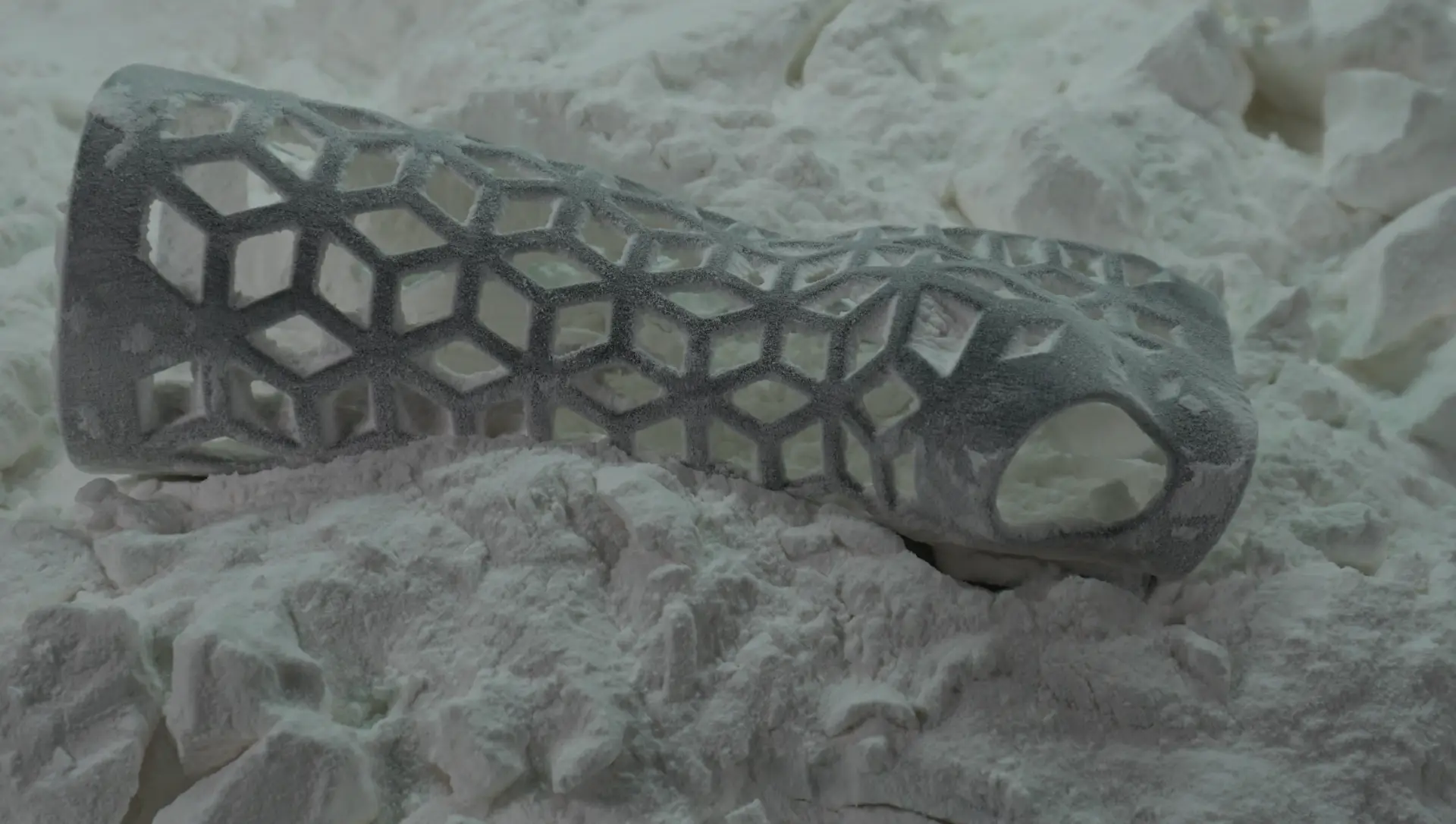
Every cast is printed layer by layer from a file the software created for one patient. Drag the handle to see a cast fresh out of the printer, and the finished product.
Comparison
| Gero 3D-printed cast | Traditional cast | |
|---|---|---|
| Weight | About 60 g | 1.5 to 2 kg |
| Fit | Designed from a 3D scan of the patient's limb | Wrapped and molded by hand on the limb |
| Water | Water-resistant: showering and swimming, with the doctor's approval | Usually has to be kept dry |
| Ventilation | Open structure that lets air flow and allows cleaning | Closed, so the skin underneath gets no air |
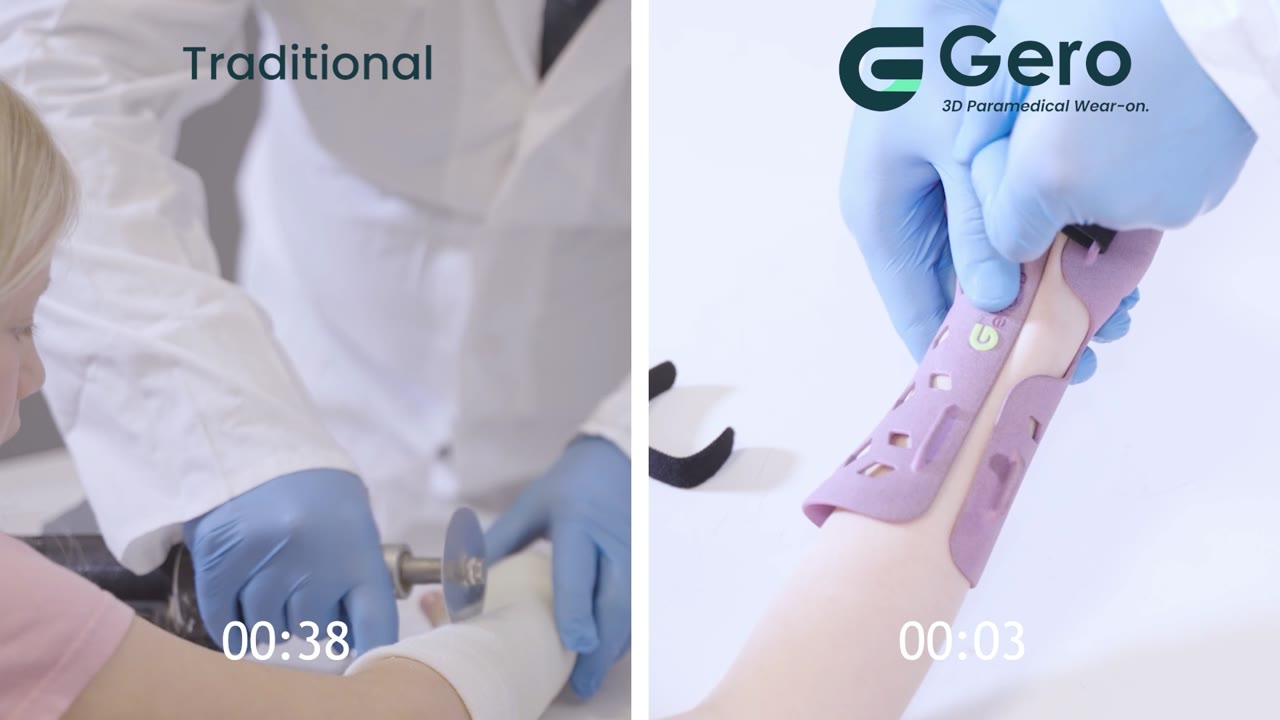
| Removal | No electric saw | Usually with a cast saw |
| Design | Color and pattern chosen by the patient | Usually white or a single color |
| At the clinic | Scan and order from one app, no cast room | Cast room, water basins and materials |
Cast types
Casts designed from each patient's scan, plus a temporary splint for the first visit.
For wrist, forearm and hand fractures. Designed from the patient's scan.
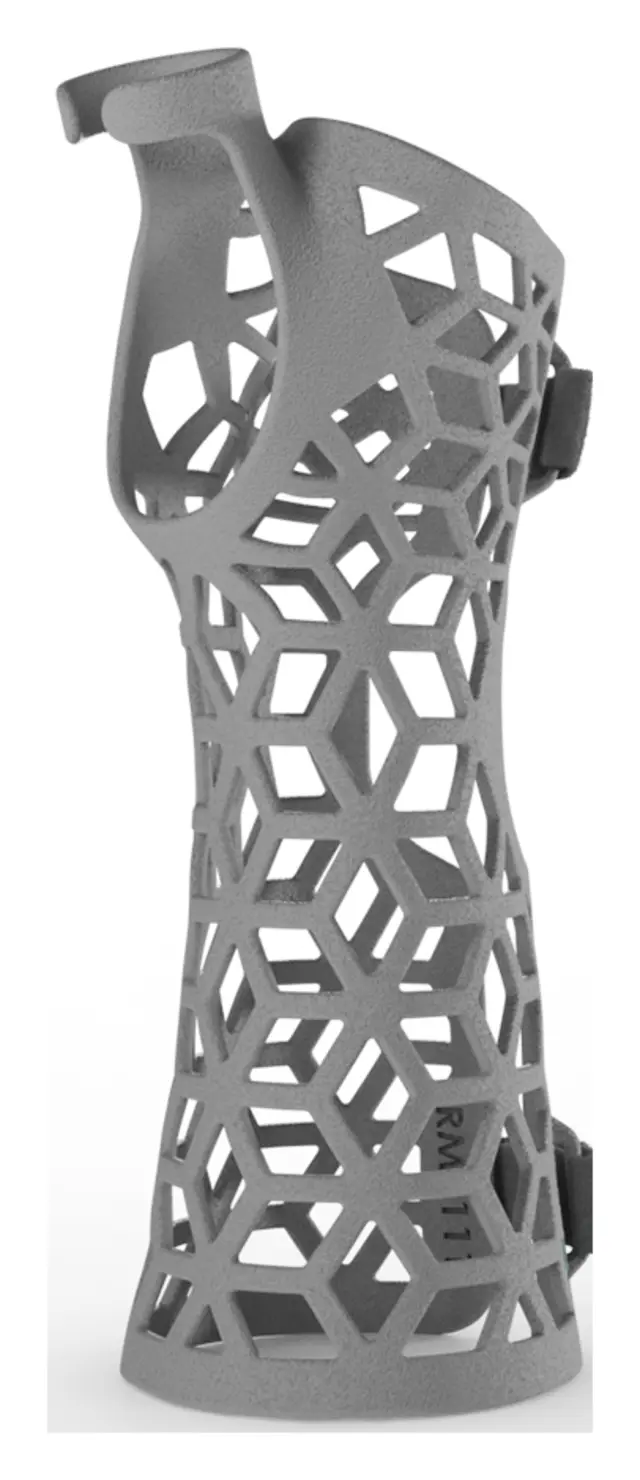
For thumb and scaphoid fractures. Immobilizes the thumb in the same open, lightweight structure.
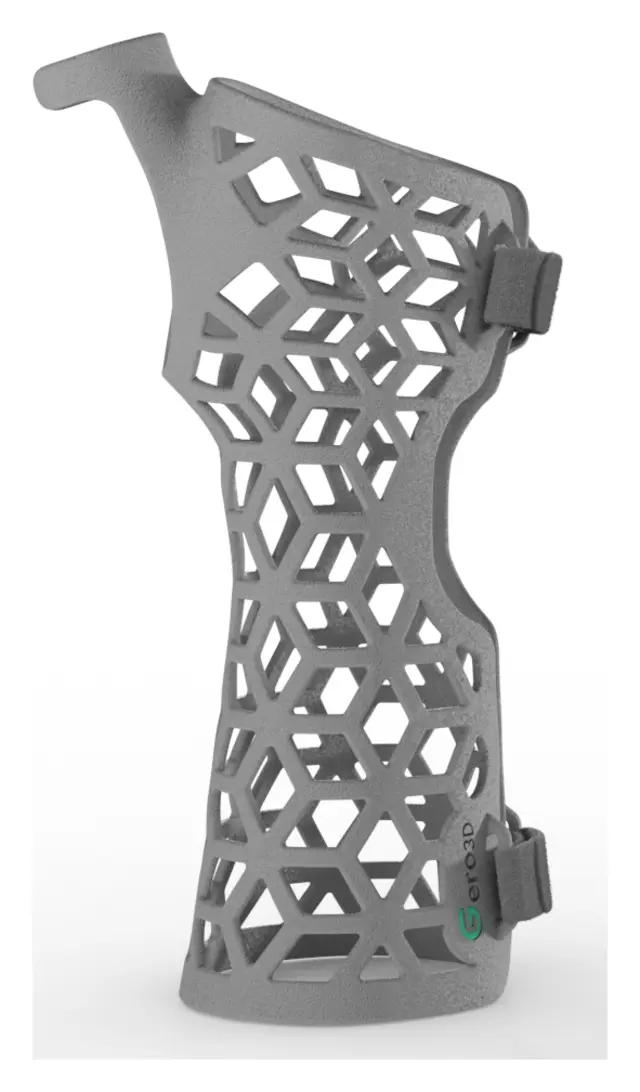
For De Quervain's tenosynovitis and conditions on the radial side of the wrist. The fingers stay free.
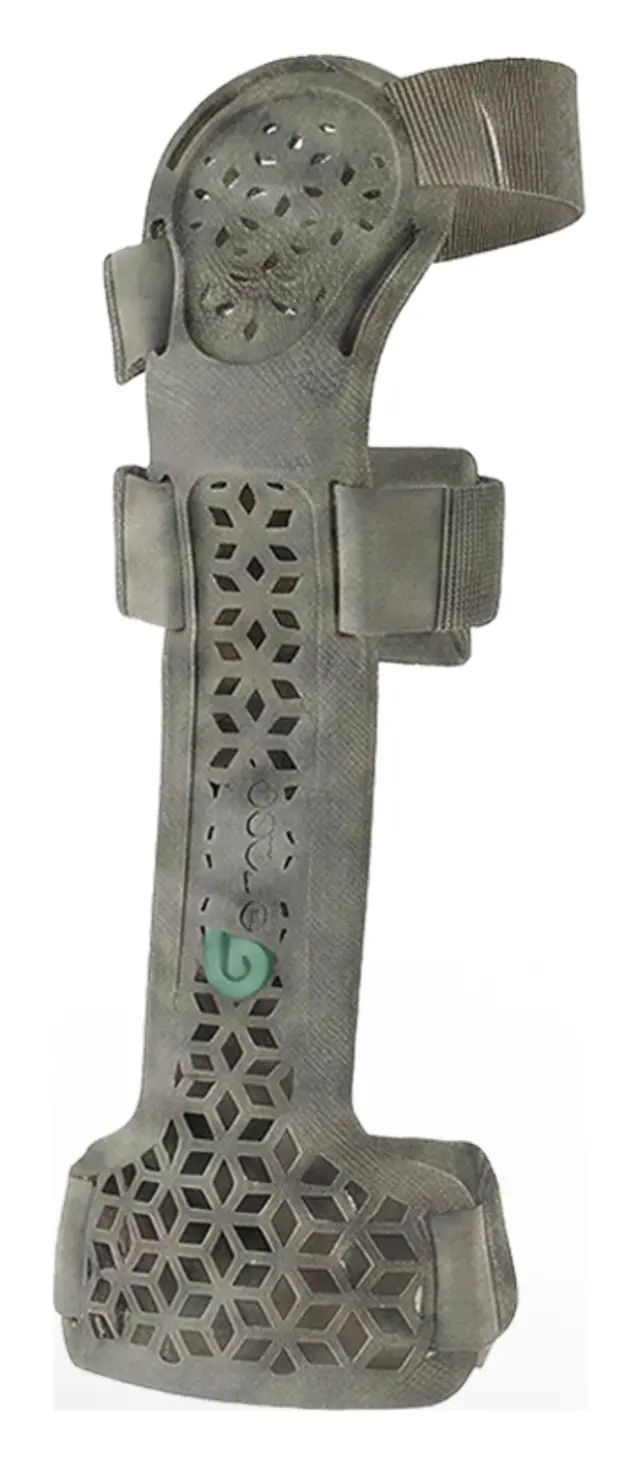
A ready-made wrist splint in three sizes for the first visit, while the swelling goes down. Fitted in under five minutes.
Gero operates a quality management system for medical devices under ISO 13485:2016, certified by the Standards Institution of Israel (certificate 1123048). The ONE Splint is registered with the Israel Ministry of Health Medical Devices Division (AMAR) and listed with the U.S. FDA. Cast fitting and treatment decisions are always made by the treating doctor.
Patients
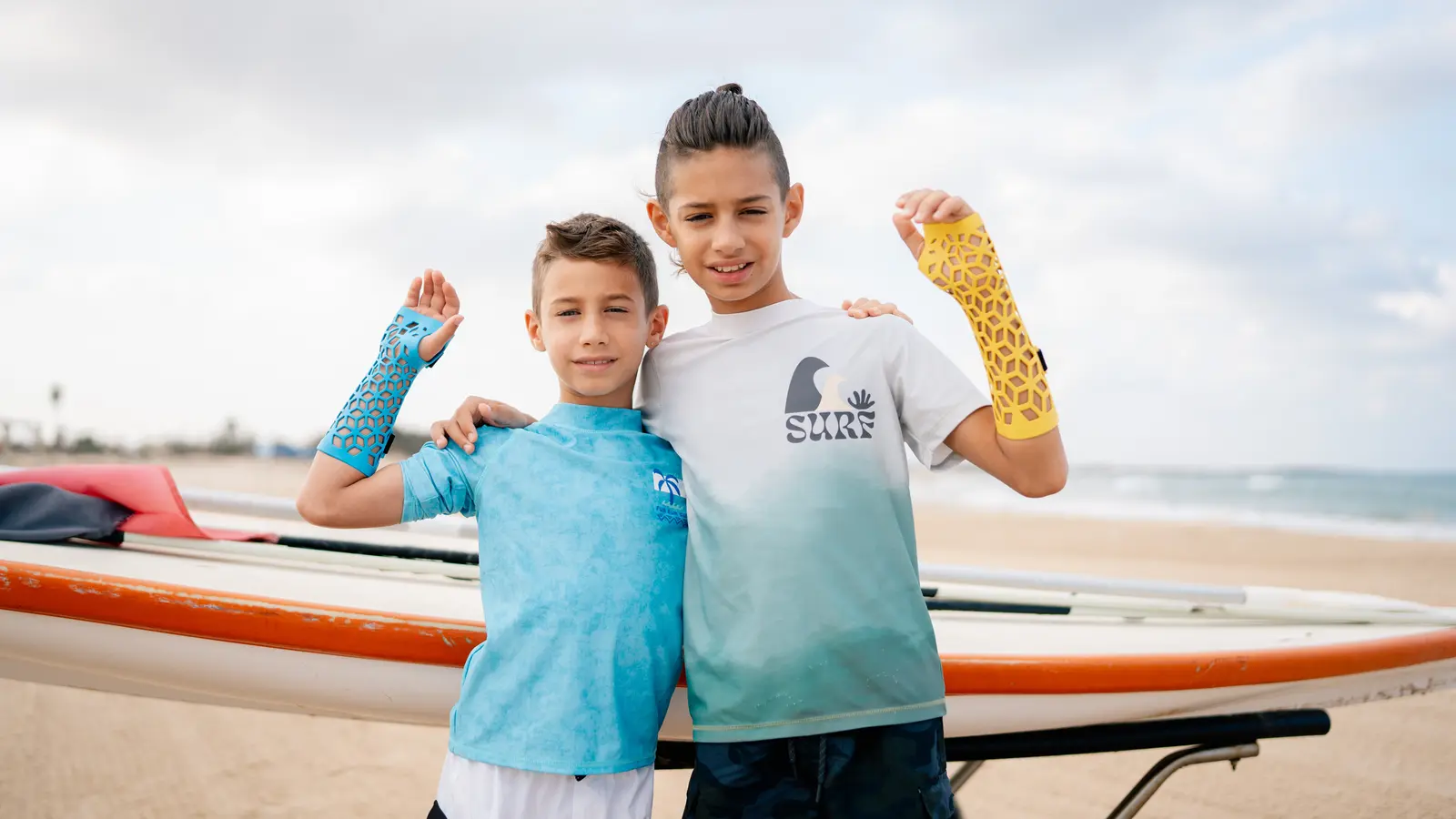
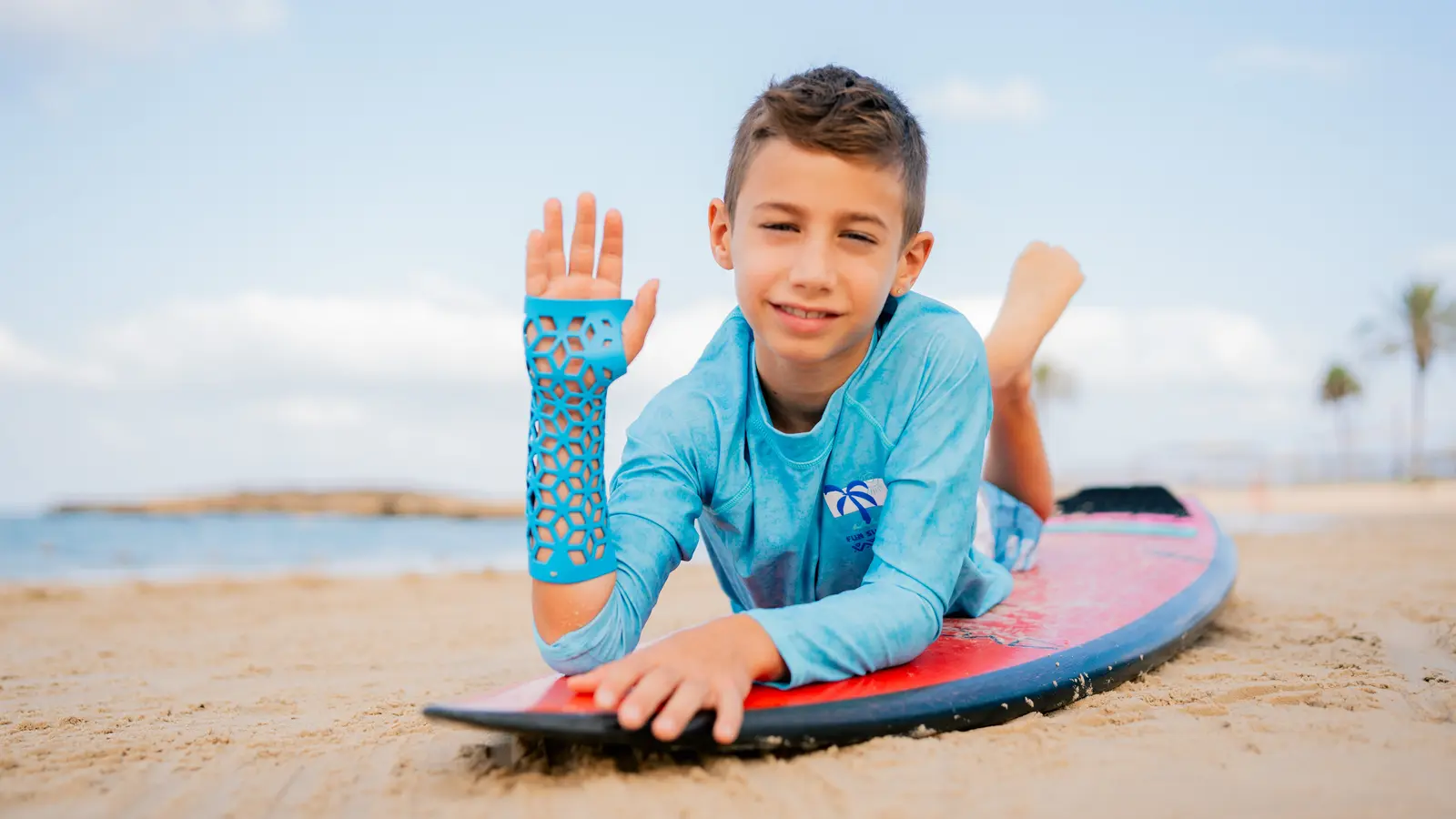
A lightweight, water-resistant cast lets patients keep up their routine: showering, school, work, and with the doctor's approval, swimming too.

At the clinic
Filmed with Schneider Children's Medical Center: follow 9-year-old Amy from her first visit to cast removal.
FAQs
A cast made by 3D printing from a scan of the patient's limb. Instead of wrapping plaster or fiberglass, the limb is scanned, software designs a cast that fits its shape, and the cast is printed as an open, ventilated structure.
The Gero cast is water-resistant, so you can shower and swim with it. Get approval from your treating doctor before swimming or sports. After it gets wet, dry the cast with a fan on a low-temperature setting.
Gero casts are currently designed for fractures and conditions of the wrist, forearm, hand and thumb, including scaphoid fractures and De Quervain's tenosynovitis. The orthopedic doctor decides whether a 3D-printed cast is right for each patient's specific condition.
The cast is printed and shipped to the clinic within 3 days of the order. At the first visit, the patient gets a temporary splint (ONE Splint) for the first few days, until the custom cast arrives.
The cast opens and comes off without a cast saw.
A Gero cast weighs about 60 g. A traditional plaster cast usually weighs 1.5 to 2 kg.
Biocompatible materials chosen to be skin-friendly, lightweight and durable.
The price depends on the size and type of cast. Clinics can contact us for a price list and start with a pilot of 10 casts at no cost.
Gero casts are fitted at clinics that work with us. Email us at office@gero3d.com and we'll tell you where the service is available.
For clinics
Start with a free pilot: 10 casts at no cost, training at your clinic, and we provide the iPad.
A patient? Email office@gero3d.com and we'll tell you where you can get a Gero cast.