3D-Printed Casts in Hospital Fracture Care: How the Workflow Fits
In many hospitals, an upper-limb fracture follows the same path: a temporary splint or backslab in the emergency department, then a visit to the fracture clinic and a definitive cast made in the plaster room. This guide shows where a 3D-printed cast workflow fits into that path, and what changes for the team and for patients.
1. First visit: splint and scan
At the first visit the team applies the ONE Splint, a ready-made 3D-printed wrist splint in three sizes that is applied in under five minutes, for the first days while swelling subsides. During the same visit the limb is scanned with the Gero app on an iPad or iPhone, in a two-minute workflow.
2. Design and production
Our software designs the personalized cast automatically in about 40 seconds, instead of about 45 minutes of manual design work. The cast is printed and finished by the production network; in Israel it reaches the clinic within 3 days.
3. Follow-up: fitting the cast
At the follow-up visit the personalized cast replaces the splint. There is no plaster, no water basin and no saw at removal, and the team scans and orders from one app.
4. What changes for patients
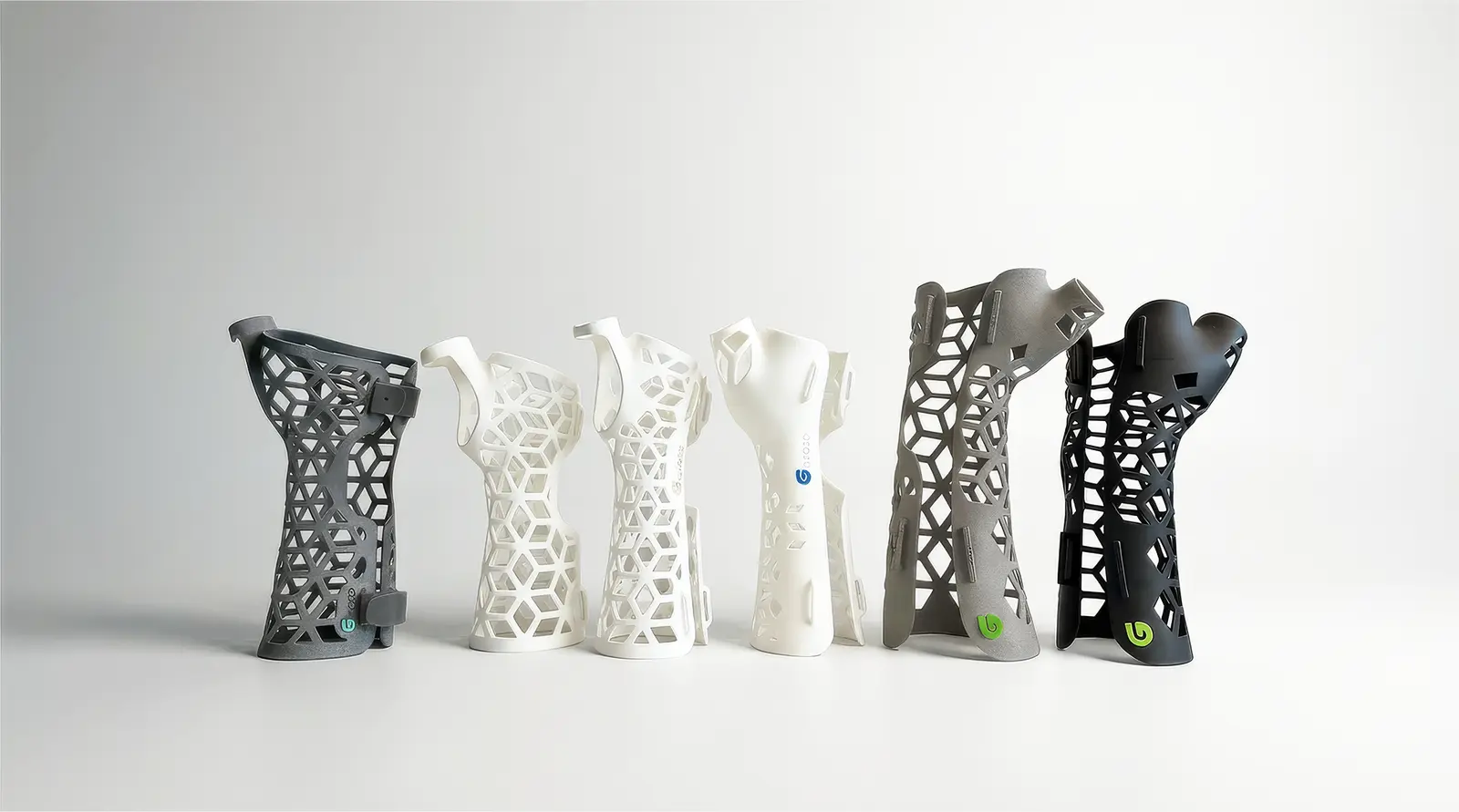
- About 60 g, compared with 1.5 to 2 kg for a traditional cast.
- Water-resistant, so patients can shower with the doctor's approval.
- An open structure that lets air flow and is easy to clean.
- A colour and pattern the patient chooses.
5. Which injuries it covers today
Gero casts are made for the upper limb: the Short Arm Cast (wrist, forearm and hand), the Thumb Spica Cast (thumb and scaphoid) and the De Quervain Cast. Lower-limb devices are in development. Whether a 3D-printed cast suits a given patient is always the treating doctor's decision.
6. Starting with a pilot
Gero casts are used in clinics in Israel, where more than 500 treatments have been done and Gero3D has an agreement with Maccabi Healthcare Services. In the United States, Gero3D is starting a pilot program with clinics. Teams can start with a free pilot of 10 casts, with free training and the equipment provided. Book a demo.