
3D-Printed Cast for a Broken Wrist: What Patients Should Know
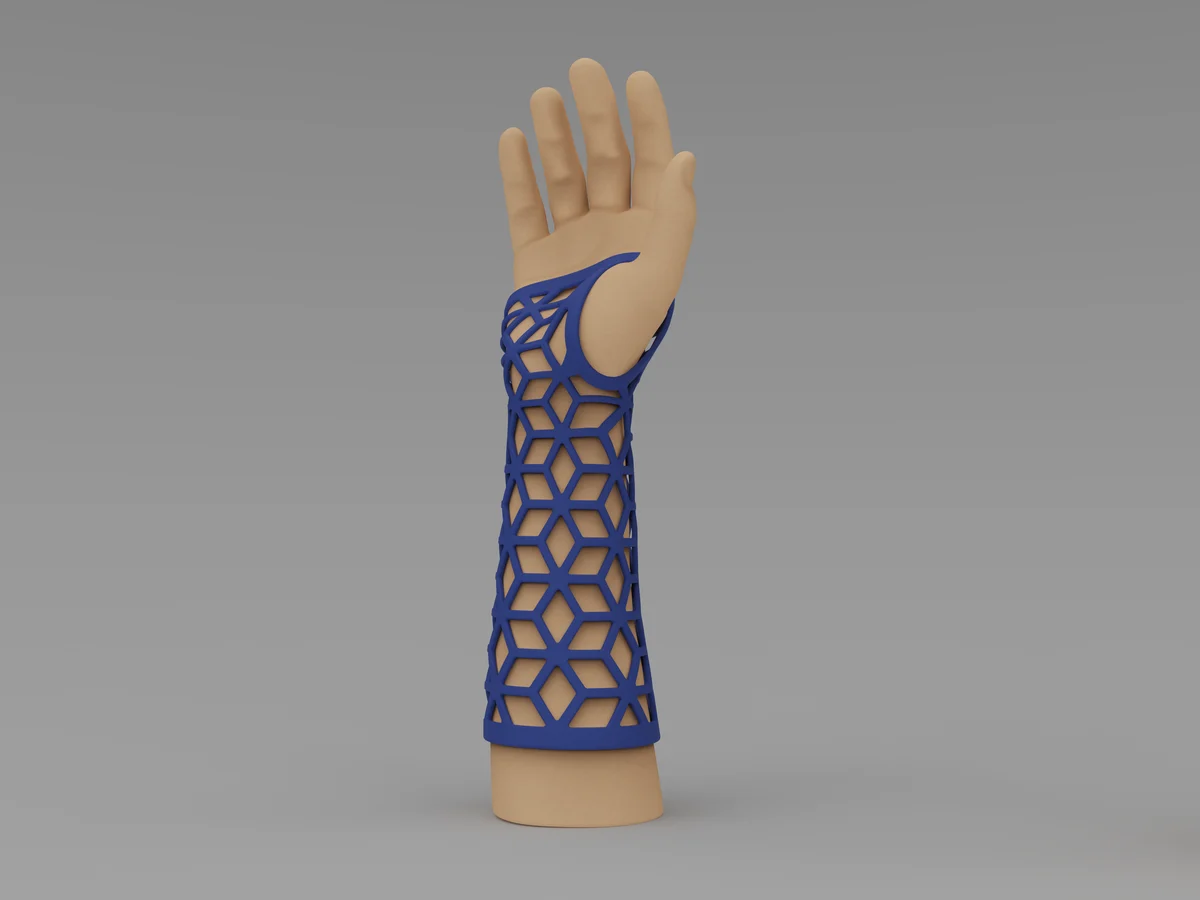
A broken wrist is one of the most common reasons people end up in a cast. If you have read about 3D-printed casts and wonder whether one could be an option for you, this page explains how the Gero cast for the wrist works, what to expect, and how to ask your clinic about it.
1. The Gero cast for the wrist
The Gero Short Arm Cast is made for fractures and conditions of the wrist, forearm and hand. It is designed from a 3D scan of your own arm and printed with an open lattice structure. Whether a 3D-printed cast suits your fracture, and when, is always your treating doctor's decision.
2. The first days: a splint while swelling goes down
Right after an injury the wrist is usually swollen. At the first visit the clinic may give you a ONE Splint, a ready-made 3D-printed wrist splint, for those first days. During the same visit the team scans your arm with the Gero app in about two minutes. In Israel the personalized cast reaches the clinic within 3 days and replaces the splint.
3. Living with the cast
- Weight: about 60 g, compared with 1.5 to 2 kg for a traditional cast.
- Water: water-resistant, so you can shower with your doctor's approval.
- Skin: the open structure lets air flow and is easy to clean.
- Style: you choose the colour and pattern.
See the patient page for care tips.
4. Taking it off
The Gero cast comes off without a saw. When it comes off is decided by your doctor.
5. Where to get one
Gero casts are fitted through clinics. In Israel they are used in clinics where more than 500 treatments have been done, and Gero3D has an agreement with Maccabi Healthcare Services. In the United States, Gero3D is starting a pilot with clinics. Read where to get a 3D-printed cast, or tell us which clinic treats you and we'll ask them about offering Gero.